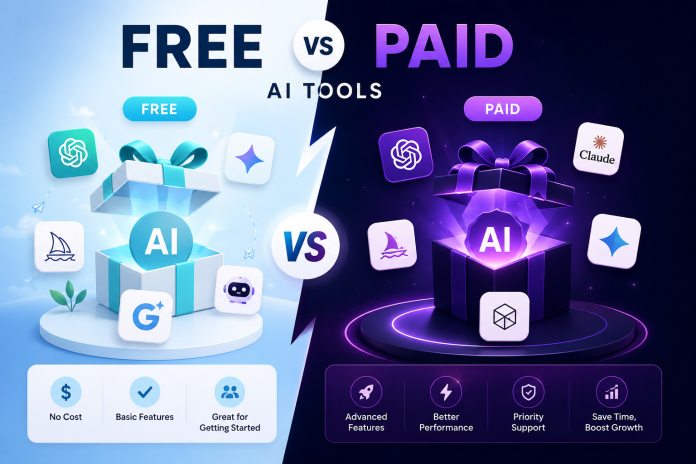
With thousands of AI tools now available, one of the most common questions users face is whether to stick with free versions or invest in paid subscriptions. While free AI tools have become increasingly capable, paid versions often unlock significant additional value but is the upgrade always worth it?
This guide breaks down the key differences between free and paid AI tools, helping you make an informed decision based on your specific needs and budget.
Understanding Free AI Tools
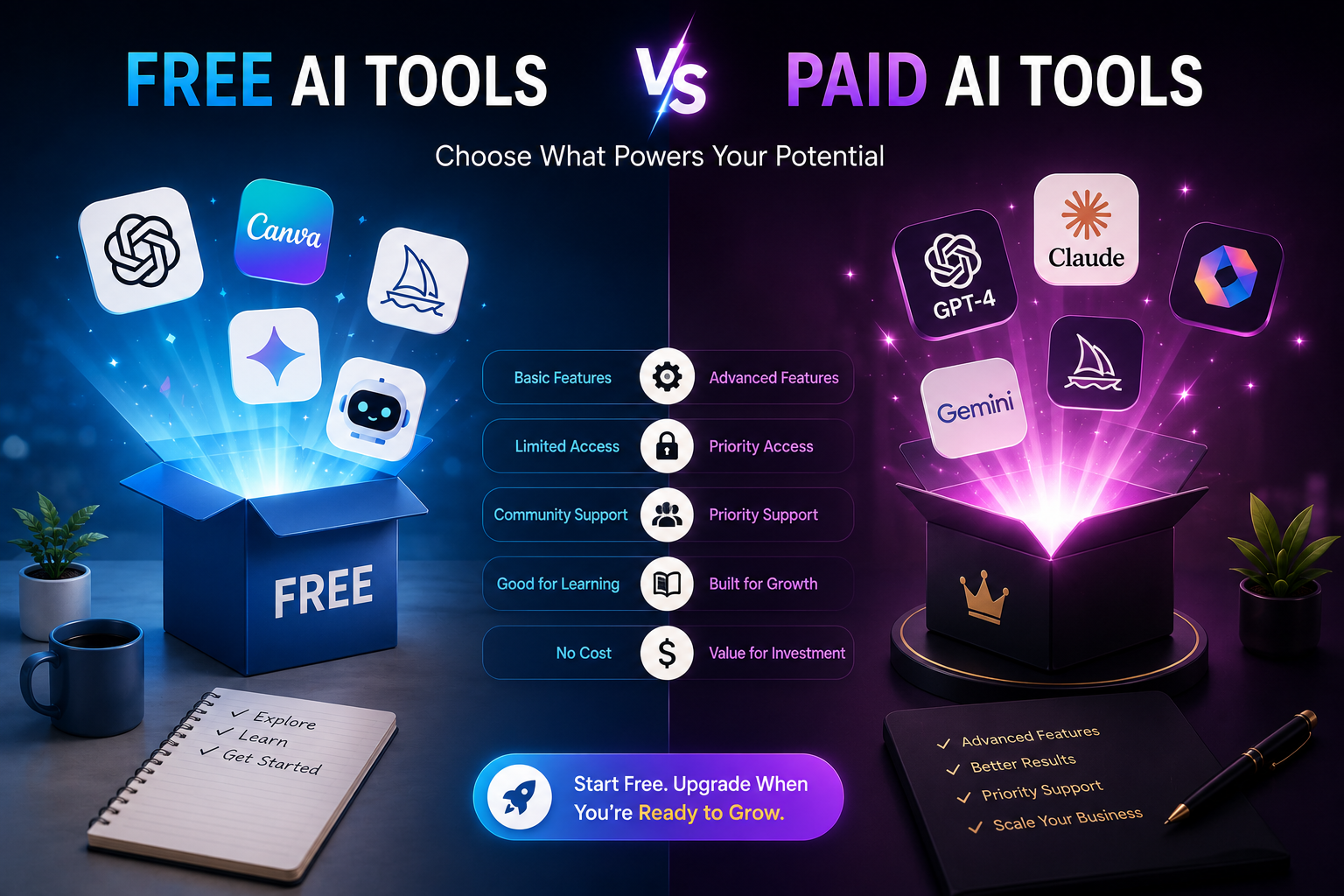
Free AI tools typically offer a limited but functional version of a platform’s capabilities, allowing users to experience core features without financial commitment. Companies offer free tiers for several strategic reasons:
- User acquisition: Free access helps companies build a large user base and demonstrate value before asking for payment.
- Market competition: With so many AI tools available, free tiers help companies stand out in a crowded market.
- Data and feedback: Free users often provide valuable usage data and feedback that helps companies improve their products.
Common Limitations of Free AI Tools
While free tools can be genuinely useful, they typically come with certain restrictions:
- Usage limits: Free tiers often cap the number of queries, generations, or actions per day or month.
- Reduced feature access: Advanced features, such as higher-quality outputs or specialized tools, are often reserved for paid users.
- Slower processing speeds: Free users may experience longer wait times, especially during high-demand periods.
- Limited customization: Free versions often lack the ability to fine-tune outputs or integrate with other business tools.
- Data privacy considerations: Some free tools may use your data for training purposes, which paid enterprise tiers often exclude.
Understanding Paid AI Tools
Paid AI tools typically offer expanded capabilities designed for more serious, frequent, or professional use. Common benefits include:
- Higher usage limits or unlimited access: Paid plans often remove or significantly increase caps on usage.
- Access to advanced features: This might include higher-quality outputs, priority processing, or specialized capabilities not available in free tiers.
- Better integration options: Paid plans often support integration with other business tools and platforms.
- Enhanced support: Paid users typically receive better customer support and faster issue resolution.
- Improved data privacy: Many paid, especially enterprise-tier, plans offer stronger data privacy guarantees.
When Free AI Tools Are Sufficient
Free AI tools are often a great fit for:
- Occasional or personal use: If you only need AI assistance occasionally, free tiers often provide sufficient value.
- Testing and evaluation: Free versions allow you to test a tool’s capabilities before committing to a paid plan.
- Basic tasks: Simple tasks like drafting short emails or answering general questions often don’t require advanced paid features.
- Budget-conscious individuals or small businesses: Free tools can provide meaningful value without financial investment, especially when starting out.
When Paid AI Tools Make Sense
Upgrading to a paid plan often makes sense when:
- You rely on the tool for professional or business-critical work, where usage limits or feature restrictions would hinder productivity.
- You need consistent, high-quality output for client work or public-facing content.
- You require integration with other business systems, such as CRM platforms or project management tools.
- Data privacy is a significant concern, particularly for businesses handling sensitive information.
- Time savings outweigh subscription costs – if a paid tool saves several hours of work monthly, the investment often pays for itself.
Comparing Popular AI Tools: Free vs Paid Tiers
ChatGPT
The free tier provides access to a capable AI model with some usage limitations, while paid plans offer access to more advanced models, faster response times, and additional features like file uploads and extended context.
Canva AI Features
Canva’s free plan includes basic AI-powered design features, while paid plans unlock advanced tools like background removal, more sophisticated image generation, and expanded template access.
Grammarly
Grammarly’s free version covers basic grammar and spelling corrections, while paid plans add tone adjustments, plagiarism detection, and more advanced writing suggestions.
How to Decide: A Practical Framework
When deciding between free and paid AI tools, consider asking yourself:
- How frequently will I use this tool?Occasional use may not justify a paid subscription.
- What specific features do I need?If free tiers meet your core requirements, upgrading may not be necessary.
- What’s the cost of limitations?Consider whether usage caps or feature restrictions would meaningfully hinder your work.
- What’s my budget?Balance the tool’s potential value against your available budget, especially for individuals or small businesses.
- Can I start free and upgrade later?Many tools allow you to start with a free tier and upgrade as your needs grow, reducing initial financial risk.
Hidden Costs to Consider
When evaluating paid AI tools, consider potential hidden costs beyond the subscription price:
- Learning curve:Time invested in learning advanced features of paid tools
- Integration costs:Additional expenses if connecting the tool to other business systems requires technical support
- Multiple subscriptions:Costs can add up quickly if you’re using several paid AI tools simultaneously
Final Thoughts
Choosing between free and paid AI tools ultimately depends on your specific needs, usage frequency, and budget. Free tools offer excellent value for occasional use, testing, and basic tasks, while paid tools become worthwhile investments for professional, business-critical, or high-volume use cases.
Rather than assuming paid is always better, evaluate your actual usage patterns and specific feature requirements to determine whether an upgrade genuinely adds value to your workflow.
Frequently Asked Questions
- Are free AI tools good enough for personal use?
Yes, in most cases. Free AI tools typically provide sufficient value for occasional, personal, or basic tasks without requiring a paid subscription. - When should a business upgrade to paid AI tools?
Businesses should consider upgrading when usage limits hinder productivity, when advanced features are needed for professional work, or when data privacy requirements demand enterprise-level protections. - Do paid AI tools guarantee better quality output?
Generally, yes. Paid tiers often provide access to more advanced models or features that produce higher-quality, more customizable outputs compared to free versions. - Can I switch from a free plan to a paid plan later?
Yes. Most AI tools allow users to start with a free tier and upgrade to a paid plan whenever their needs grow, reducing financial risk when testing new tools. - Is it safe to use free AI tools for business purposes?
It depends on the specific tool’s data privacy policy. Businesses handling sensitive information should carefully review data usage terms before using free tiers for business-critical tasks.