
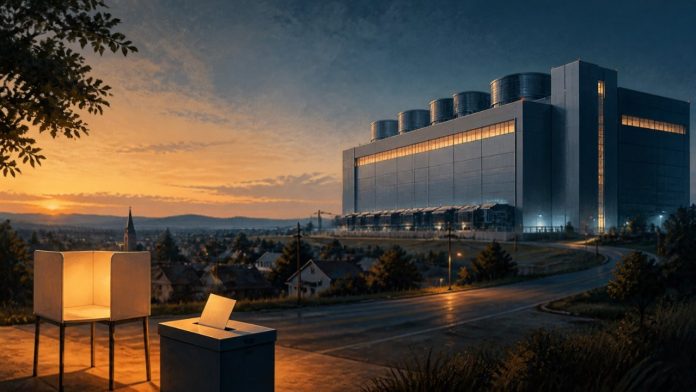
The AI boom needs enormous amounts of computing power, and that power lives in data centers. On Tuesday, November 3, 2026, voters in several US states are deciding whether to allow more of them. This guide explains what is on the ballot, why opposition has grown and what it could mean for AI companies and users.
What Is on the Ballot
Ballotpedia, a non-partisan research group, tracks local measures that would delay, prohibit or add new requirements for data centers. Its count shows 38 data center ballot measures across eight states in 2026: Ohio, Illinois, Wisconsin, Kansas, California, Michigan, Nevada and Florida. Other news outlets report slightly different totals, anywhere from about 34 to 41, depending on the tracker and the date. Michigan’s only confirmed measure was already decided in August.
Ohio is the center of the fight. Around 20 or 21 of the measures are in Ohio communities, including proposals in places such as Granville, Hubbard, Piqua, Urbana and Upper Sandusky that would prohibit data center construction more broadly. Ballotpedia says about 82 percent of the measures qualified through citizen petitions, which shows the push is coming from residents.
Why Voters Are Pushing Back
A Gallup poll released in May 2026 found that 71 percent of Americans oppose building an AI data center in their community. Local concerns usually include electricity demand, water use, noise, land use and the feeling that big projects arrive with little say for residents. The buildout, backed by companies such as OpenAI, Oracle, Amazon and Microsoft, is estimated at roughly $600 billion, so the stakes are large.
Earlier this year, four local measures were decided with overwhelming opposition to data centers. Candidates in both parties who once praised data centers as an economic boost have become more cautious.
OpenAI’s Planned Rebrand
Reports say OpenAI is preparing a post-election push to describe its sites as “AI compute campuses” and to pitch them as local economic boosts. It points to a project it is helping build in Pike County, Ohio, which promises thousands of jobs. OpenAI’s policy chief Chris Lehane has called the debate democracy in action, and the company wants state bills that give locals a voice in new projects.
What It Could Mean for AI
If measures pass in many places, companies may face delays, higher costs or a search for friendlier locations. Industry analysts describe ballot measures as a new regulatory risk, because once a citizen initiative qualifies, companies have far less room to negotiate than they do in the legislature. Some projects have already run into trouble. Reports note that data center capacity under construction is up sharply across the country, so the tension is not going away.
For everyday AI users, the effect would be indirect. Fewer or slower data centers could limit how fast AI companies add capacity, which can influence prices, usage limits and how quickly new features reach users. It is too early to say how large that effect will be.
What to Watch After Election Day
- Which measures pass, especially the bans and moratoriums in Ohio and Kansas.
- Whether companies change plans or move projects to other locations.
- How state legislatures respond with their own data center rules.
- Whether the “AI compute campus” messaging changes public opinion.
Final Thoughts
Results were not final when this was published, so check local election results for the measures in your area. Whatever the outcome, the debate shows that AI is no longer only a technology story. It is now a land, power and politics story too.