
As Artificial Intelligence capabilities continue to expand rapidly, governments and international bodies around the world are working to establish regulatory frameworks that balance innovation with safety, fairness, and accountability. 2026 has emerged as a pivotal year for AI governance, with significant regulatory milestones shaping how businesses and developers approach AI deployment.
This article explores the current state of AI regulation, key developments shaping the industry, and what these changes mean for businesses working with AI technology.
Why AI Regulation Has Become a Priority
The rapid advancement of AI capabilities has outpaced the development of comprehensive governance frameworks in many regions, creating urgency around establishing clear rules and standards. Key concerns driving regulatory efforts include:
- Data privacy: Ensuring AI systems handle personal and sensitive data responsibly
- Algorithmic bias: Preventing AI systems from perpetuating or amplifying unfair discrimination
- Transparency: Requiring clarity around how AI systems make decisions, particularly in high-stakes applications
- Safety and security: Addressing risks associated with increasingly powerful AI systems, including potential misuse
- Economic and labor impacts: Managing AI’s effects on employment and economic structures
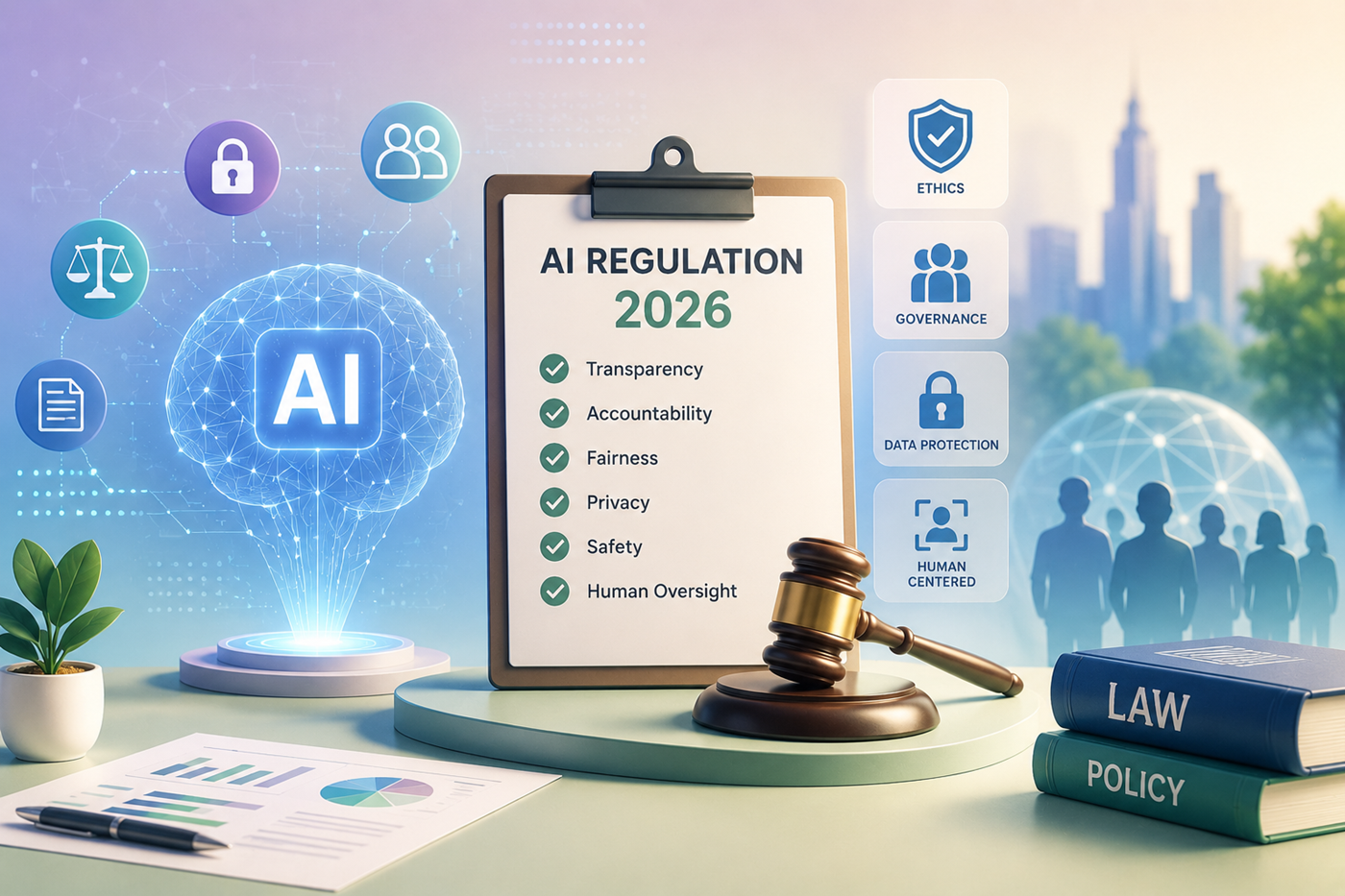
The EU AI Act: A Global Benchmark
The European Union’s AI Act stands as the world’s first comprehensive AI regulatory framework, classifying AI systems by risk level and imposing transparency, documentation, and safety requirements on higher-risk applications. This risk-based approach has become an influential model, with many other regions studying or adapting similar frameworks for their own regulatory efforts.
For businesses building AI systems that affect areas like employment, credit, education, or critical infrastructure or serving users within the EU understanding the Act’s requirements and building compliance into product development from the start has become essential.
Global Governance Efforts
Beyond regional frameworks like the EU AI Act, international cooperation on AI governance has also gained momentum. A UN scientific panel on AI regularly assesses evidence on the technology’s opportunities, risks, and impacts, producing independent reports that inform government policy decisions.This work feeds into broader international dialogue, where member states discuss coordinated approaches to managing AI’s global impact.
The panel’s assessment emphasizes that AI’s ultimate impact whether it narrows or widens inequalities, and whether it strengthens or weakens democratic institutions will depend significantly on how quickly governance frameworks can keep pace with the technology’s rapid advancement.
Regional and Sector-Specific Regulations
Beyond broad national or international frameworks, sector-specific and regional regulations have also emerged. For example, some local government bodies have introduced requirements for AI tools used within public institutions, such as bias and equity reviews before deployment across large-scale public systems like school districts.
These localized regulations often address specific concerns relevant to particular sectors, such as education, healthcare, or financial services, adding additional layers of compliance considerations for businesses operating across multiple jurisdictions.
What This Means for Businesses
Increased Compliance Requirements
Businesses developing or deploying AI systems, particularly in high-risk categories, face growing documentation, transparency, and safety obligations. This often requires dedicated compliance resources and processes integrated directly into AI development workflows.
The Need for Cross-Jurisdictional Awareness
As different regions adopt varying regulatory approaches, businesses operating internationally must navigate a complex patchwork of requirements, making legal and compliance expertise increasingly valuable.
Growing Demand for AI Governance Roles
The expanding regulatory landscape has created demand for new professional roles focused specifically on AI compliance, ethics, and governance within organizations.
Competitive Implications
Some businesses view robust compliance practices as a competitive advantage, using demonstrated responsible AI practices to build trust with customers, partners, and government entities.
Balancing Innovation and Regulation
A central tension in AI governance involves balancing the need for oversight with preserving space for continued innovation. Proponents of stronger regulation argue that clear rules build public trust and prevent harmful outcomes, while critics caution that overly restrictive requirements could slow beneficial AI development or disadvantage smaller companies with fewer compliance resources.
This tension continues to shape ongoing policy debates, with different regions taking varying approaches based on their specific priorities and political contexts.
Practical Steps for Businesses Navigating AI Regulation
- Stay informed about relevant regulations in the jurisdictions where you operate or serve customers.
- Build compliance considerations into AI development from the start, rather than treating it as an afterthought.
- Document AI system design and decision-making processes to support transparency requirements.
- Consult legal and compliance experts familiar with AI-specific regulatory requirements.
- Monitor regulatory developments continuously, as this remains a rapidly evolving area of policy.
The Road Ahead for AI Governance
As AI capabilities continue to advance, regulatory frameworks will likely continue evolving to address new challenges and use cases. Key areas to watch include:
- Expansion of risk-based regulatory modelss imilar to the EU AI Act in other regions
- Continued international dialogue aimed at establishing coordinated global governance approaches
- Sector-specific regulations addressing unique considerations in areas like healthcare, finance, and education
- Evolving standards around AI transparency and explainability, particularly for high-stakes decision-making systems
Final Thoughts
AI regulation has become a defining feature of the industry’s development in 2026, with frameworks like the EU AI Act setting influential precedents and international bodies working toward more coordinated global governance. For businesses working with AI technology, understanding and proactively addressing these regulatory requirements has become an essential part of responsible AI development and deployment.
As governance frameworks continue to mature, staying informed and building compliance into AI strategies from the outset will remain critical for businesses looking to navigate this evolving landscape successfully.
Frequently Asked Questions
- What is the EU AI Act?
The EU AI Act is the world’s first comprehensive AI regulatory framework, classifying AI systems by risk level and imposing documentation, transparency, and safety requirements on higher-risk applications. - Does AI regulation only affect large tech companies?
No. Any business developing or deploying AI systems that affect areas like employment, credit, education, or serve users in regulated regions may need to comply with relevant AI regulations, regardless of company size. - Is there a global AI regulatory framework?
Not yet a single unified framework, but international bodies are working toward more coordinated global governance approaches through ongoing dialogue and cooperation between nations. - How can businesses stay compliant with evolving AI regulations?
Businesses should stay informed about relevant regulations, build compliance into AI development from the start, and consult legal experts familiar with AI-specific regulatory requirements. - Will AI regulation slow down innovation?
This remains a subject of ongoing debate. Proponents argue clear regulations build trust and prevent harm, while critics worry overly restrictive rules could slow beneficial AI development, particularly for smaller companies.