

The 80s AI Photo Trend Is Everywhere, Here Is The Exact Prompt Formula Behind It
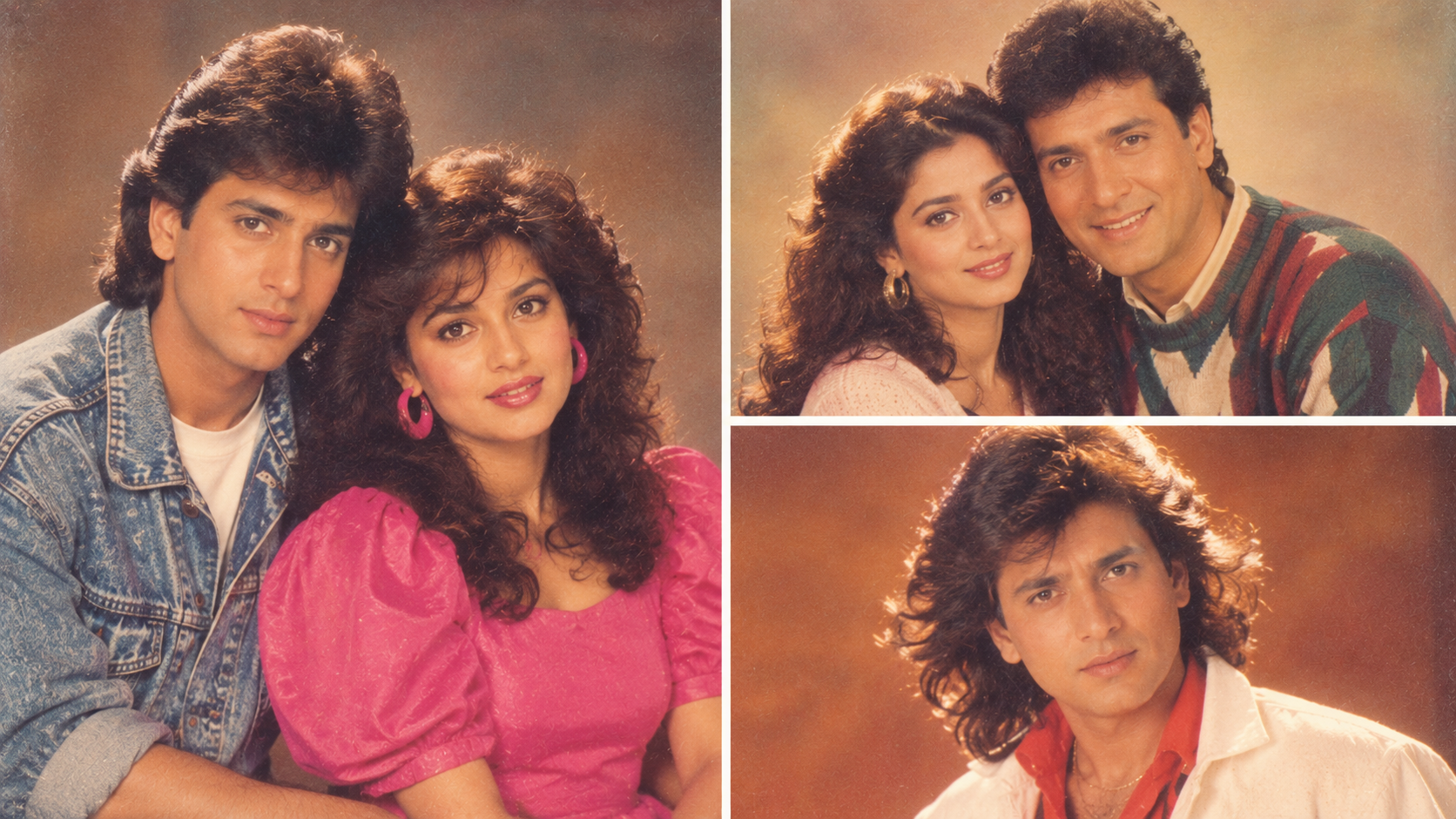
Scroll through Instagram or X this week and the pattern is impossible to miss: feathered hair, studio flash lighting, faded warm colors, and a grainy analog finish. A wave of users, including several Bollywood names, are turning ordinary selfies into convincing 1980s-style portraits using nothing but a single AI prompt and a reference photo.
Unlike a simple filter that just tints an image, this trend rebuilds the hairstyle, wardrobe, lighting, and film grain from scratch, which is why the results look like they were pulled from an actual family album rather than run through an app.

Bollywood Has Already Joined The Trend
The trend has moved well beyond regular social media users. Kiara Advani and Sidharth Malhotra shared a retro couple portrait, with Sidharth in a double-denim look and Kiara in a bright pink puffed-sleeve outfit. Parineeti Chopra and Raghav Chadha posted a vintage-style couple photo with a playful caption about the two of them meeting decades earlier. Actor-politician Ravi Kishan also joined in with a flowing-hair 1980s hero makeover.
Their participation is a big part of why the format spread so quickly this week, once fans saw familiar faces in the aesthetic, they wanted to try it on themselves.
What Is Driving The 80s AI Photo Trend
The trend sits on top of a bigger shift in how people use generative image tools. Modern models can now hold on to a person’s facial identity while completely reconstructing everything around it, the backdrop, the outfit, the hair, and the camera style.
That combination of accuracy and creative freedom is what makes an old-school aesthetic like the 1980s so easy to recreate convincingly, and it explains why the format has spread across every major image-generation platform rather than staying limited to one app.
The Prompt Structure That Actually Works
Most viral versions of this prompt follow the same four-part structure, and understanding it matters more than memorizing any single wording, because it lets you adapt the look to your own photo instead of getting a generic result.
- Identity lock: Explicitly tell the model to preserve facial structure, skin tone, and identity, and to avoid smoothing or beautifying the face. This single instruction is what separates a photo that still looks like you from a generic AI face.
- Era-accurate styling: Describe the specific 1980s look you want, such as feathered layers or a voluminous perm, matched to your current hair length and texture, plus period-appropriate clothing.
- Lighting and camera treatment: Call out studio flash or natural daylight, soft focus, and analog 35mm film grain to avoid a flat, modern digital look.
- Setting and mood: Specify the backdrop, a studio portrait, a family living room, a mall photo booth, or a magazine-style cover, so the model has a complete scene to build rather than just a filter to apply.
Here is a ready-to-use version that combines all four blocks:
“Reimagine this exact photo as an authentic 1980s studio portrait. Keep my face, facial structure, skin tone, and identity fully recognizable, do not change my facial features or smooth my skin. Give me a period-accurate 1980s hairstyle matched to my current hair length. Add 1980s-appropriate clothing and a classic studio backdrop. Use warm studio flash lighting, soft focus, and authentic analog film grain, avoid any modern digital or smartphone-style finish.”
Which AI Tools People Are Actually Using
This trend is not tied to one single app, it works on any image model that accepts a reference photo alongside a text prompt. A few tools have emerged as the most common choices:
- ChatGPT with image generation: Widely used because of how easily it accepts a photo upload plus a detailed text prompt, and how well it follows multi-part instructions like the identity lock.
- Gemini running on Nano Banana: Known for holding facial structure faithfully on the first attempt and for very fast generation times, often producing a result in a fraction of the time other tools take.
- Grok Imagine: A newer but increasingly common third option for this exact trend, particularly for users already active on X.
Results differ slightly by model, so a useful tip circulating online is to run the same prompt through two different tools and pick whichever output actually looks like you, since identity preservation quality varies from one generation to the next.
Tips For A Believable Result
- Start with a clear, front-facing, well-lit photo, this matters more than the exact wording of the prompt.
- If the first result overdoes the effect, use conversational refinement rather than starting over, simply reply with a specific fix like reducing hair volume or warming the lighting slightly.
- A single, clean look almost always reads as more authentic than a photo crowded with every retro effect at once.
- Keep the identity-lock line in every version of the prompt, it is the difference between a personalized result and a generic AI-generated face.
Why This Matters Beyond A Social Trend
Beyond the nostalgia factor, this trend is a simple, low-stakes way to learn a prompt structure that applies far beyond retro photos. The same lock-identity-then-layer-changes approach works for professional headshots, creative portraits, and any edit where keeping a subject recognizable while changing their surroundings actually matters.
Frequently Asked Questions
1. Do I need a paid AI subscription to try this? No, basic image generation is available on free tiers of most major AI tools, though paid plans typically offer more generations and higher-quality output.
2. Will the AI actually keep my real face? Only if the prompt explicitly instructs it to preserve facial identity and skin tone. Skipping that instruction is the most common reason results end up looking like a different, generic person.
3. What kind of photo works best as a reference? A clear, front-facing, well-lit photo works best for portrait-style results, while a half or full-body shot gives the model more to work with for full outfit changes.
4. Can I use this same prompt structure for other decades? Yes, the four-part structure, identity lock, era styling, lighting and camera treatment, and setting, works for recreating any past decade, not just the 1980s.