
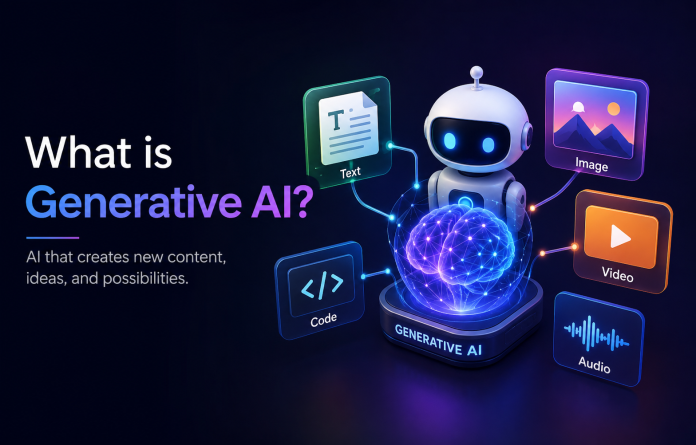
Generative AI has become one of the most talked-about technologies of the decade, powering tools that can write essays, create images, compose music, and even generate working code. But what exactly is Generative AI, and how does it differ from the AI technologies that came before it?
This guide breaks down Generative AI in simple, practical terms covering what it is, how it works, and why it’s reshaping industries from content creation to software development.
What Is Generative AI?
Generative AI refers to a category of Artificial Intelligence systems capable of creating new content including text, images, audio, video, and code based on patterns learned from existing data. Unlike traditional AI systems designed to classify or predict outcomes, Generative AI produces entirely new outputs that didn’t exist before.
Popular examples of Generative AI include tools like ChatGPT for text generation, Midjourney and DALL-E for image creation, and various AI coding assistants that generate functional software code.
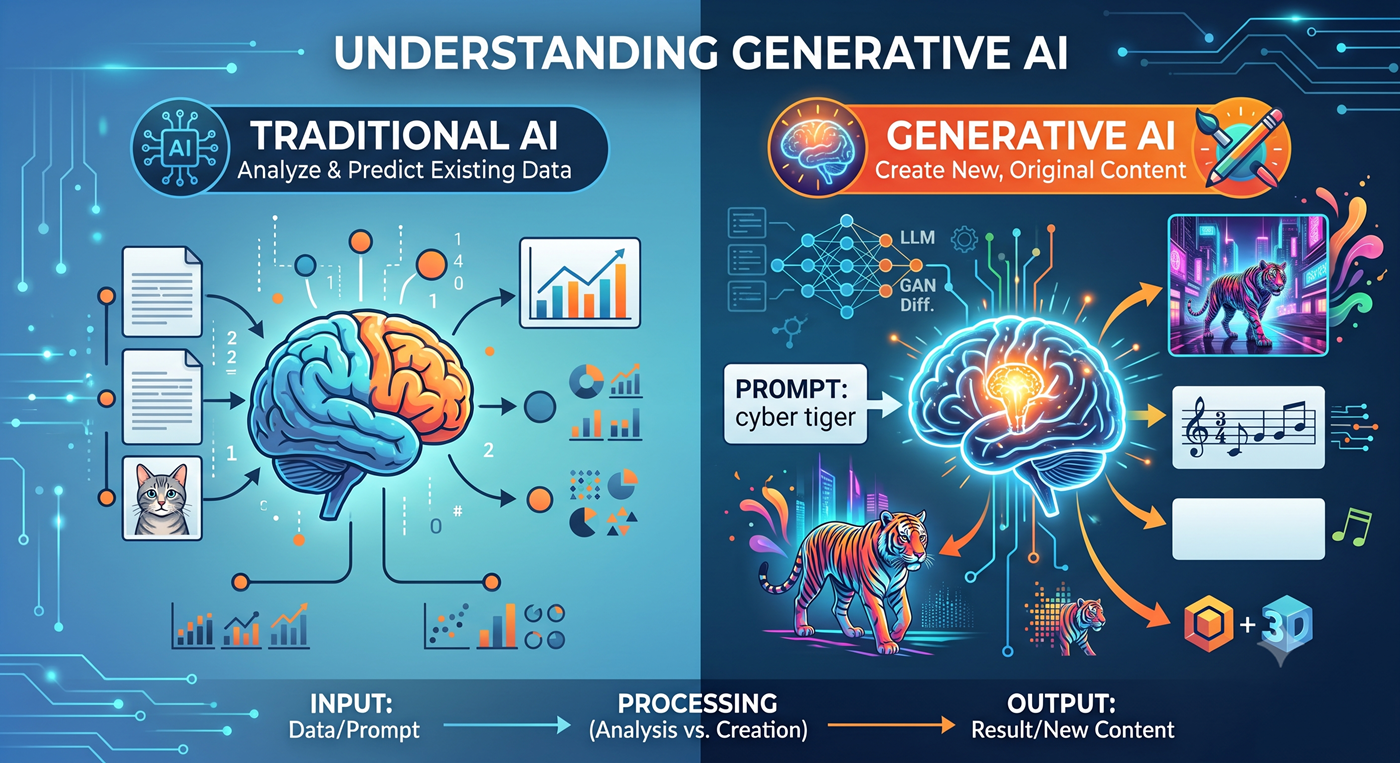
In simple terms: Generative AI doesn’t just analyze data. it creates something new from it.
How Does Generative AI Work?
Generative AI models are built using deep learning techniques, particularly a type of architecture called transformers, which revolutionized how machines process and generate language and other content types.
The Training Process
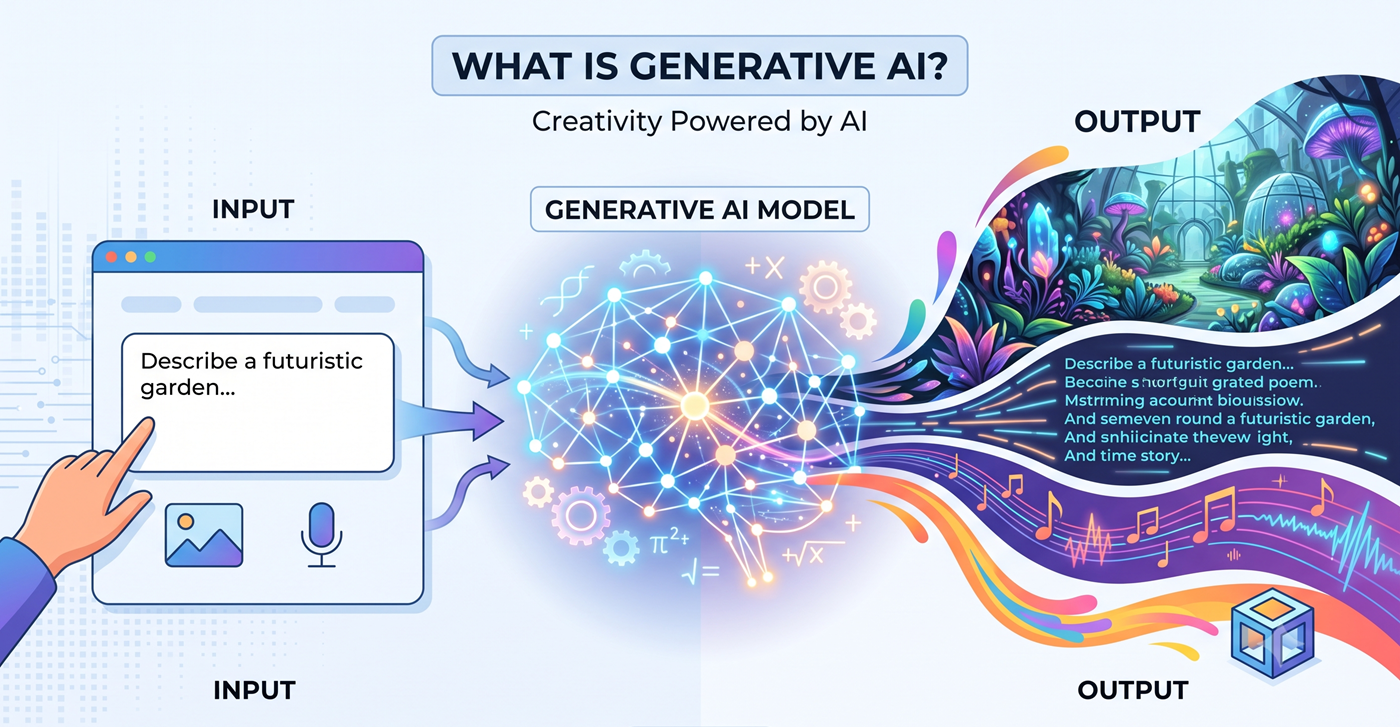
Generative AI models are trained on massive datasets containing text, images, or other relevant content. During training, the model learns patterns, structures, and relationships within the data essentially learning “what good output looks like” based on the examples it’s seen.
Generating New Content
Once trained, the model can generate new content by predicting the most likely next element in a sequence whether that’s the next word in a sentence, the next pixel in an image, or the next note in a melody. This process happens incredibly fast, allowing these tools to generate coherent, often impressively creative outputs in seconds.
Types of Generative AI
Text Generation
Large language models like ChatGPT, Claude, and Gemini can generate human-like text for a wide range of purposes, including writing articles, answering questions, drafting emails, and summarizing information.
Image Generation
Tools like Midjourney, DALL-E, and Stable Diffusion can create original images based on text descriptions, enabling users to generate artwork, product mockups, and marketing visuals without traditional design skills.
Audio and Music Generation
Generative AI tools can now compose original music, generate realistic voice narration, and even clone specific voices for various applications.
Video Generation
Emerging generative video tools can create short video clips based on text prompts, opening new possibilities for content creation and marketing.
Code Generation
AI coding assistants can generate functional code snippets, debug existing code, and even build entire applications based on natural language descriptions.
Real-World Applications of Generative AI
Generative AI has quickly moved from experimental technology to practical business tool:
- Content marketing: Businesses use generative AI to draft blog posts, social media content, and ad copy at scale.
- Design and creative work: Designers use AI image generators to create concept art, mockups, and marketing visuals faster than traditional methods.
- Software development: Developers use AI coding assistants to accelerate development, debug code, and learn new programming concepts.
- Customer service: Businesses use generative AI chatbots to provide more natural, conversational customer support.
- Education: Generative AI tools help create personalized learning materials and explanations tailored to individual student needs.
Why Generative AI Has Grown So Quickly
Several factors have driven the rapid adoption of Generative AI:
- Accessibility: Tools like ChatGPT require no technical expertise, making powerful AI capabilities available to everyday users.
- Quality improvements: Modern generative models produce increasingly coherent, accurate, and creative outputs.
- Broad applicability: Generative AI applies across countless industries and use cases, from marketing to software development.
- Cost efficiency: Businesses can significantly reduce content creation costs and time using generative tools.
Limitations and Challenges of Generative AI
Despite its impressive capabilities, Generative AI has notable limitations:
- Accuracy issues: Generative models can produce incorrect or fabricated information, often referred to as “hallucinations.”
- Bias in outputs: Since models learn from existing data, they can inherit and reproduce biases present in that data.
- Copyright and originality concerns: Questions remain about the originality and ownership of AI-generated content, particularly when models are trained on copyrighted material.
- Over-reliance risks: Businesses and individuals relying too heavily on generative AI without human oversight risk producing lower-quality or inaccurate content.
Best Practices for Using Generative AI
To get the most value from Generative AI tools while minimizing risks:
- Always fact-check AI-generated content, especially for factual claims or statistics.
- Use AI as a starting point, not a final product— human review and editing remain essential.
- Be specific with prompts to get more accurate, relevant outputs.
- Understand platform-specific usage rights regarding ownership and commercial use of generated content.
- Stay updated on evolving regulations related to AI-generated content disclosure and copyright.
The Future of Generative AI
Generative AI continues to evolve rapidly, with several trends shaping its future:
- Multimodal capabilities: Newer models can process and generate multiple content types (text, image, audio) within a single system.
- Improved accuracy and reliability: Ongoing research aims to reduce hallucinations and improve factual accuracy.
- Deeper business integration: Generative AI is increasingly embedded directly into business software, from CRM systems to design platforms.
- Stronger regulatory frameworks: Governments are developing guidelines around AI-generated content, particularly regarding transparency and copyright.
Final Thoughts
Generative AI represents one of the most significant technological shifts in recent history, enabling machines to create content that was once exclusively a human capability. From text and images to code and music, generative tools are reshaping how businesses and individuals approach content creation, design, and problem-solving.
Understanding what Generative AI is and how to use it responsibly and effectively is becoming an essential skill as these tools continue to integrate into everyday work and life.
Frequently Asked Questions
- What is Generative AI in simple terms?
Generative AI refers to AI systems that can create new content such as text, images, audio, or code based on patterns learned from existing data. - How is Generative AI different from traditional AI?
Traditional AI typically classifies or predicts outcomes based on existing data, while Generative AI creates entirely new content that didn’t exist before. - What are some popular Generative AI tools?
Popular examples include ChatGPT and Claude for text generation, Midjourney and DALL-E for image generation, and various AI coding assistants for software development. - Is content created by Generative AI always accurate?
No. Generative AI can produce incorrect or fabricated information, often called “hallucinations,” so human review and fact-checking remain important. - Can businesses use Generative AI content commercially?
This depends on the specific platform’s terms of use. Businesses should review usage rights and licensing terms for each generative AI tool before using outputs commercially.