
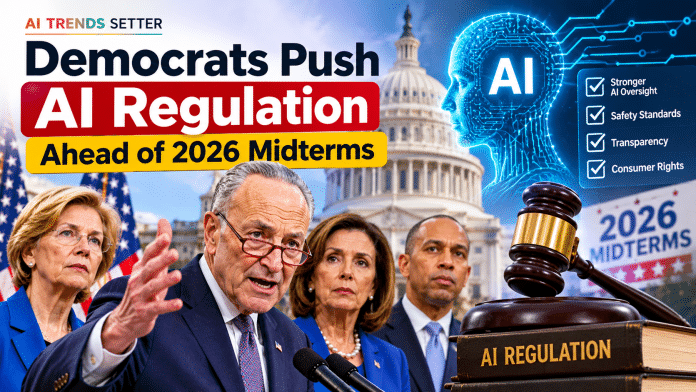
Democrats Are Not Banning AI, They Are Regulating It
After the 2026 midterm elections, Democrats flipped control of both the House and the Senate. Within a day, party leaders made it clear that the hands-off approach to artificial intelligence in Washington is about to end. The message is not a ban on AI. It is a push for public hearings and legislative guardrails.
What Democratic Leaders Have Said
At a post-election press conference with House Democratic leadership, Rep. Ted Lieu of California said the new majority will do two things next term: hold public hearings on AI and pass reasonable guardrails on AI. Lieu is the vice chair of the House Democratic Caucus and co-chairs a House Democratic commission on AI. He said the group will release a document outlining policy priorities for the new Congress.
Rep. Greg Casar of Texas went further, saying his party must make it a top priority to protect Americans’ jobs, freedom and lives from AI billionaires, and that AI company CEOs should be called to testify under oath.
Why AI Was a Voting Issue
According to SSRS exit polling reported by The National News Desk, 56% of voters said AI and data centers were a crucial or major factor in their votes for Congress. Voters also passed dozens of state and local ballot measures that limit construction of new data centers.
What New Senators Promised
- Annie Andrews of South Carolina advocated a two-year moratorium on data centers.
- Roy Cooper of North Carolina called for requirements that data centers cover the full cost of their energy use.
- James Talarico of Texas wants to prioritize youth safety.
How OpenAI Responded
Less than 48 hours after Election Day, OpenAI announced new commitments for its data centers, including covering energy costs and investing in jobs. The company also said voluntary commitments are only a starting point and asked federal, state and local policymakers to set clear rules for how the industry builds.
Can Democrats Actually Pass AI Laws?
Democrats won sizeable majorities, but reports say they are not large enough to override a presidential veto. President Donald Trump has been a vocal opponent of regulating AI and a champion of data centers. Voters’ rejection of Republican policies may push him to find room for compromise, so the final shape of any AI law is still open.
What This Means for AI Tool Users and Creators
For businesses, bloggers and developers who rely on AI tools, nothing changes overnight. The likely first steps are hearings, executive testimony and policy proposals. Still, rules on data center energy use, child safety and company accountability could shape pricing, availability and features of AI tools over the next few years. It is smart to follow the news and avoid building your whole workflow on a single AI provider.
Frequently Asked Questions
Are Democrats banning AI?
No. Current proposals focus on hearings, guardrails, and limits on data center buildout. A pause on advanced AI has been demanded by some members, but it is not official party policy.
Will AI tools like ChatGPT stop working?
There is no sign of that. The focus is on regulation, safety, and infrastructure rather than shutting down existing tools.
When could new AI laws pass?
The new Congress has not yet taken office, so timing is uncertain. Hearings are expected first, followed by legislation.