
What Is Vibe Coding, and Why Is Everyone Talking About It in 2026?
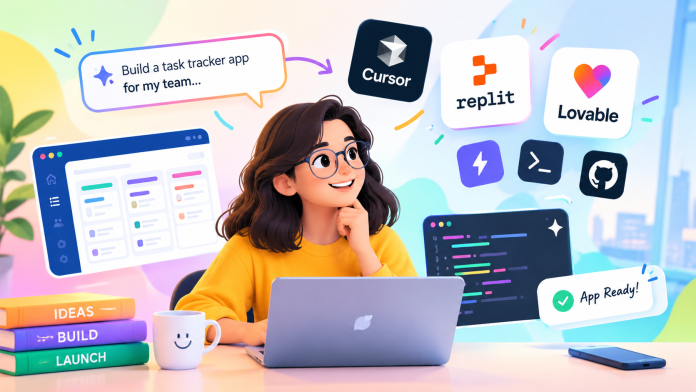
Vibe coding is the practice of describing what you want to build in plain English and letting an AI tool write, test, and even deploy the code for you. The term was coined by former Tesla AI director and OpenAI co-founder Andrej Karpathy in early 2025, and it has since gone from a niche developer joke to one of the most searched topics in tech. By mid-2026, searches for the core term were crossing 60,000 a month globally, with related queries like “how to vibe code” growing by thousands of percent in a little over a year.
For non-technical founders, marketers, and small business owners, vibe coding tools have turned “I have an idea for an app” into “I built it this afternoon.” You are no longer the person writing every line of syntax, you are the director, describing the outcome you want while the AI handles databases, backend logic, and UI.
Best Vibe Coding Tools to Try in 2026
There is no single “best” vibe coding tool, the right pick depends on whether you want a quick prototype, a production-ready app, or something in between. Here are the tools leading the space right now.
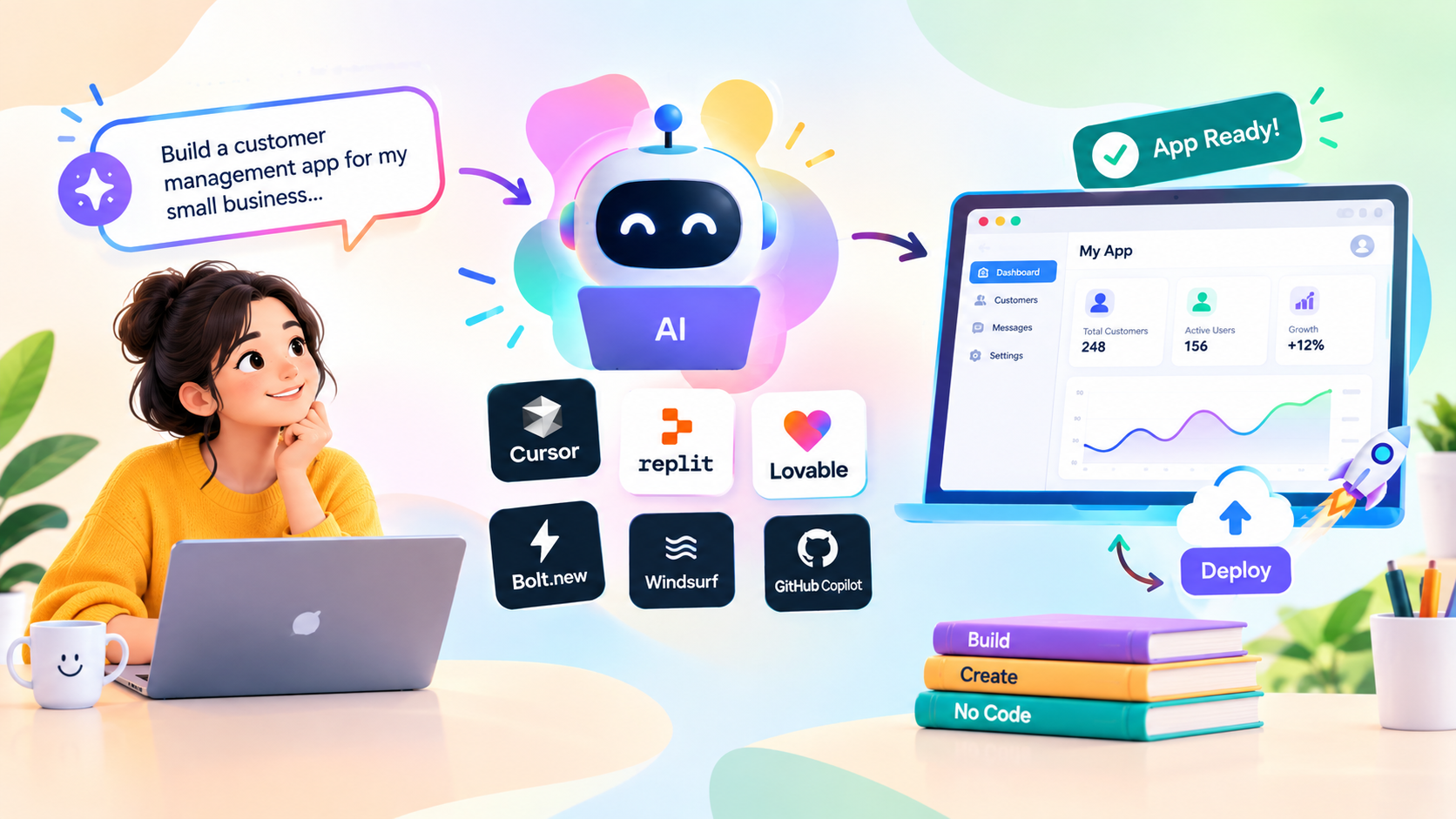
- Cursor: An AI-native code editor built on top of VS Code. Popular with both non-coders and professional developers because it blends inline suggestions with full agentic task execution across multiple files.
- Replit Agent: Lets you describe an app idea and get a working, hosted version in minutes, including the database and deployment. A favorite for solo founders testing an MVP fast.
- Lovable: Focused on turning natural language prompts into polished, deployable web apps with a strong emphasis on design quality out of the box.
- Bolt.new: A browser-based tool for rapid full-stack prototyping, known for fast iteration cycles directly in the browser.
- Windsurf: An agentic IDE aimed at developers who want more control and review over what the AI changes, sitting closer to the “agentic coding” end of the spectrum than pure vibe coding.
- GitHub Copilot: The most widely adopted AI coding assistant among professional developers, better suited to augmenting an existing workflow than building an app from a single prompt.
Vibe Coding vs Agentic Coding: What’s the Difference
These two terms get used interchangeably, but they are not the same thing. Understanding the difference will help you pick the right approach for your project.
| Aspect | Vibe Coding | Agentic Coding |
|---|---|---|
| Main input | Conversational prompts, iterate as you go | A defined goal, project rules, and success criteria |
| Human role | Continuous prompt steering | Planning, review, and approval at checkpoints |
| Best for | Prototypes, MVPs, internal tools, solo builders | Production features backed by tests and code review |
| Risk profile | Higher, since output is often not closely reviewed | Lower, since human oversight is built into the workflow |
The Risks Nobody Mentions
Vibe coding tools make it incredibly easy to ship something that works today and breaks tomorrow. Independent security research from Veracode analyzing over a hundred large language models found that a large share of AI-generated code contained exploitable security vulnerabilities. That does not mean you should avoid these tools, it means unreviewed AI output should be treated as untrusted code, not production-ready code.
Before you push a vibe-coded app live, run it through basic checks: authentication and access controls, input validation, and a manual review of anything touching user data or payments.
How to Get Started with Vibe Coding
- Pick a small, well-defined idea first, a landing page, an internal tool, or a single-feature app, rather than your entire product.
- Choose a tool based on your goal: Replit or Bolt.new for fast prototypes, Lovable for design-heavy apps, Cursor if you may want to keep editing the codebase yourself later.
- Describe the outcome clearly, including who will use it and what it needs to do, rather than technical implementation details.
- Test everything the AI builds before sharing it, especially anything involving user data or logins.
- Once the prototype proves the idea, consider moving to an agentic coding workflow with proper review for the production version.
Frequently Asked Questions
What is vibe coding?
Vibe coding is building software by describing what you want in natural language and letting an AI tool generate the code, rather than writing it line by line yourself.
Is vibe coding safe for production apps?
Not without review. AI-generated code can contain security flaws, so anything built this way should be checked for vulnerabilities before it handles real users or data.
Do I need to know how to code to start vibe coding?
No. That is the main appeal, tools like Replit, Lovable, and Bolt.new are designed for people with no programming background.
What is the difference between vibe coding and agentic coding?
Vibe coding relies on continuous conversational prompting with little review, while agentic coding gives an AI agent a defined goal along with rules, tests, and human approval steps.
Which vibe coding tool is best for beginners in 2026?
Replit and Bolt.new are generally the easiest starting points since they handle hosting and deployment automatically, letting you see a working app without any setup.
Final Thoughts
Vibe coding is not a passing trend, it is changing who gets to build software. If you run a small business or a WordPress-based content operation, the real opportunity is using these tools to build small internal tools and automations yourself instead of hiring a developer for every idea. For a related look at how AI agents are reshaping business automation more broadly, check out our guide to AI agents for small business automation.