
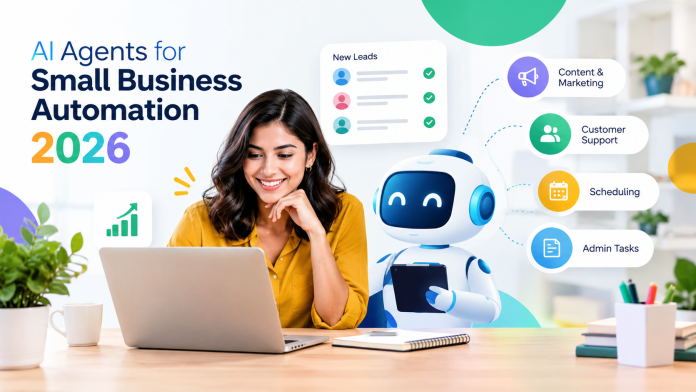
Small businesses spent 2024 and 2025 testing AI chatbots. In 2026, that experiment is over. The conversation has shifted from “can AI write a reply for me” to “can AI actually run the task without me touching it.” That shift has a name: agentic AI. Unlike a chatbot that waits for a prompt, an AI agent looks at a trigger, decides what to do, and completes the multi-step task on its own, checking in with a human only when something falls outside its rules.
For a small business owner juggling sales, support, content, and admin with a lean team, this matters more than another flashy model release. The businesses pulling ahead in 2026 are not the ones with the most AI subscriptions. They are the ones that picked one repeatable workflow, handed it to an agent, and kept a human reviewing the exceptions.
What Changed: From Chatbots to Workflow Operators
Earlier AI tools were assistants sitting next to the work. You copied text in, got a draft out, and moved it yourself. Agentic AI collapses that loop. An agent can read an incoming lead form, score it against your ideal customer profile, draft a personalized reply, and route it to the right sales rep, all without a person opening five different tabs.
This is the same shift we mapped out when we looked at AI tools for ecommerce automation, where order handling and customer replies moved from manual to autonomous. Agents are now extending that pattern into every back-office function: lead routing, invoice follow-up, appointment scheduling, and inventory alerts.
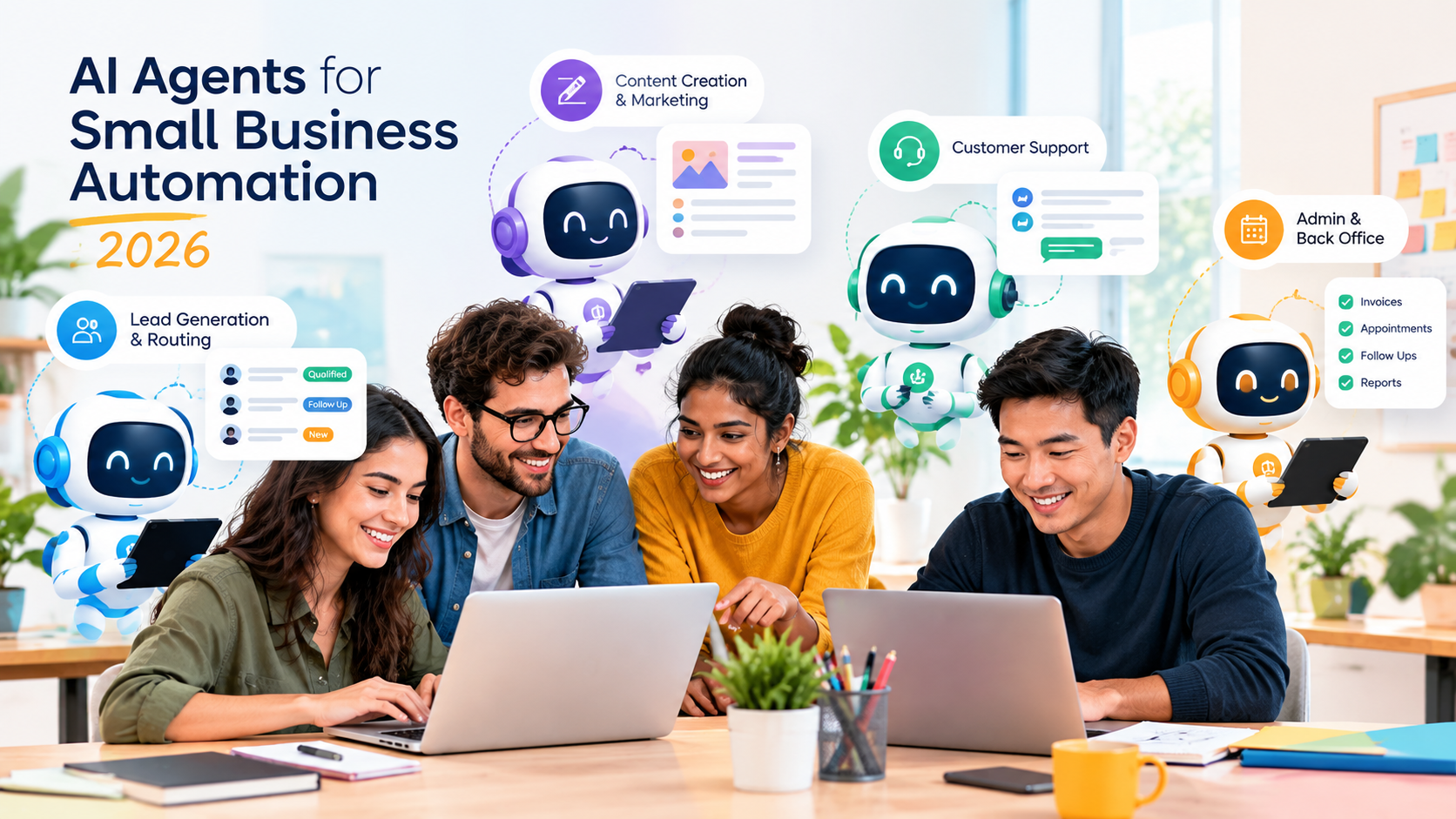
Three Places Small Businesses Are Using AI Agents Right Now
1. Lead Qualification and Routing
Leads arrive from web forms, LinkedIn, email, and webinars, and someone has to review each one before it goes cold. An agent can score the lead, personalize the first outreach message based on the source, and drop it into the correct follow-up sequence automatically. The owner only steps in when a lead does not fit any existing rule.
2. Content and Marketing Operations
Content teams are using agent stacks to research competitors, draft on-brand posts, and manage publishing calendars end to end. The catch in 2026 is that generic, undifferentiated content is losing visibility as AI-assisted search rewards originality. If you are building out a content workflow, pairing an agent with a real keyword and prompt strategy matters more than ever, which is why a structured approach like the one in our business AI prompt templates guide still pays off even when an agent is doing the drafting.
3. Admin and Back-Office Queues
Expense approvals, appointment confirmations, and basic IT ticket triage are exactly the kind of repeatable, rules-based work agents handle well. The realistic bar for 2026 is not a fully autonomous back office. It is entire queues running with light human oversight, freeing the owner or a small team to focus on exceptions and judgment calls instead of repetitive clicks.
What to Watch Before You Deploy an Agent
- Start with one workflow. Pick a single repeated bottleneck, not your entire operation. A messy, high-volume task is a better starting point than a rare, complex one.
- Keep a human on exceptions. Agents are reliable on routine paths and unreliable the moment a situation falls outside their training. Build in a review step for anything unusual.
- Protect your data. Broad file or account access should never be handed to an agent by default. Scope permissions tightly, especially around billing and customer records.
- Measure before you expand. Track time saved and error rate on the first workflow before adding a second agent. This is the same discipline we recommend when tracking content performance in our piece on measuring ROI from AI search optimization.
Multi-Agent Systems Are the Next Step
The more advanced shift happening in 2026 is the move from a single general-purpose agent to multiple specialized agents working together: one for research and drafting, one for customer-facing conversations, and one orchestration layer connecting the rest of your software stack. Small businesses do not need to build this all at once. A simple three-layer stack, one assistant, one customer-facing agent, and one automation platform, covers most of the ground without the complexity of a full enterprise deployment.
If your content operation already leans on AI tools for drafting, the same logic that applies to AI content generation tools applies here: the tool matters less than the workflow you build around it and the review step you keep in place.
The Bottom Line
AI agents in 2026 are not about replacing your team. They are about removing the repetitive, judgment-light work that eats hours every week so your team can focus on the parts of the business that actually need a person. Start small, pick a workflow with real volume, keep a human on the exceptions, and measure the result before you scale it up.
FAQ
What is the difference between an AI chatbot and an AI agent?
A chatbot responds to a single prompt and stops. An AI agent completes a multi-step task on its own, deciding what action to take next based on the situation, and only asks for human input on exceptions.
Is agentic AI safe for a small business with limited IT support?
Yes, if you start narrow. Give an agent access to one workflow and one set of data, keep a human review step for anything outside the rules, and avoid handing over broad access to financial or customer systems until the workflow has proven reliable.
Which business function should a small business automate with AI agents first?
Lead qualification and routing is one of the most common starting points because it is high-volume, repetitive, and easy to measure. Admin tasks like appointment confirmations and expense approvals are also good early candidates.