

Customer experience has become a key competitive differentiator across nearly every industry, and Artificial Intelligence is playing an increasingly central role in how businesses meet rising customer expectations. From personalized recommendations to instant customer support, AI is reshaping how businesses interact with and serve their customers.
This article explores the practical ways AI is improving customer experience, along with best practices for businesses looking to leverage these capabilities effectively.
Why Customer Experience Matters More Than Ever
Customers today expect fast, personalized, and seamless experiences across every interaction with a business. Meeting these expectations manually, especially at scale, has become increasingly difficult without the support of AI-powered tools and systems.
Businesses that successfully leverage AI to improve customer experience often see benefits including increased customer loyalty, higher satisfaction scores, and improved competitive positioning within their industry.
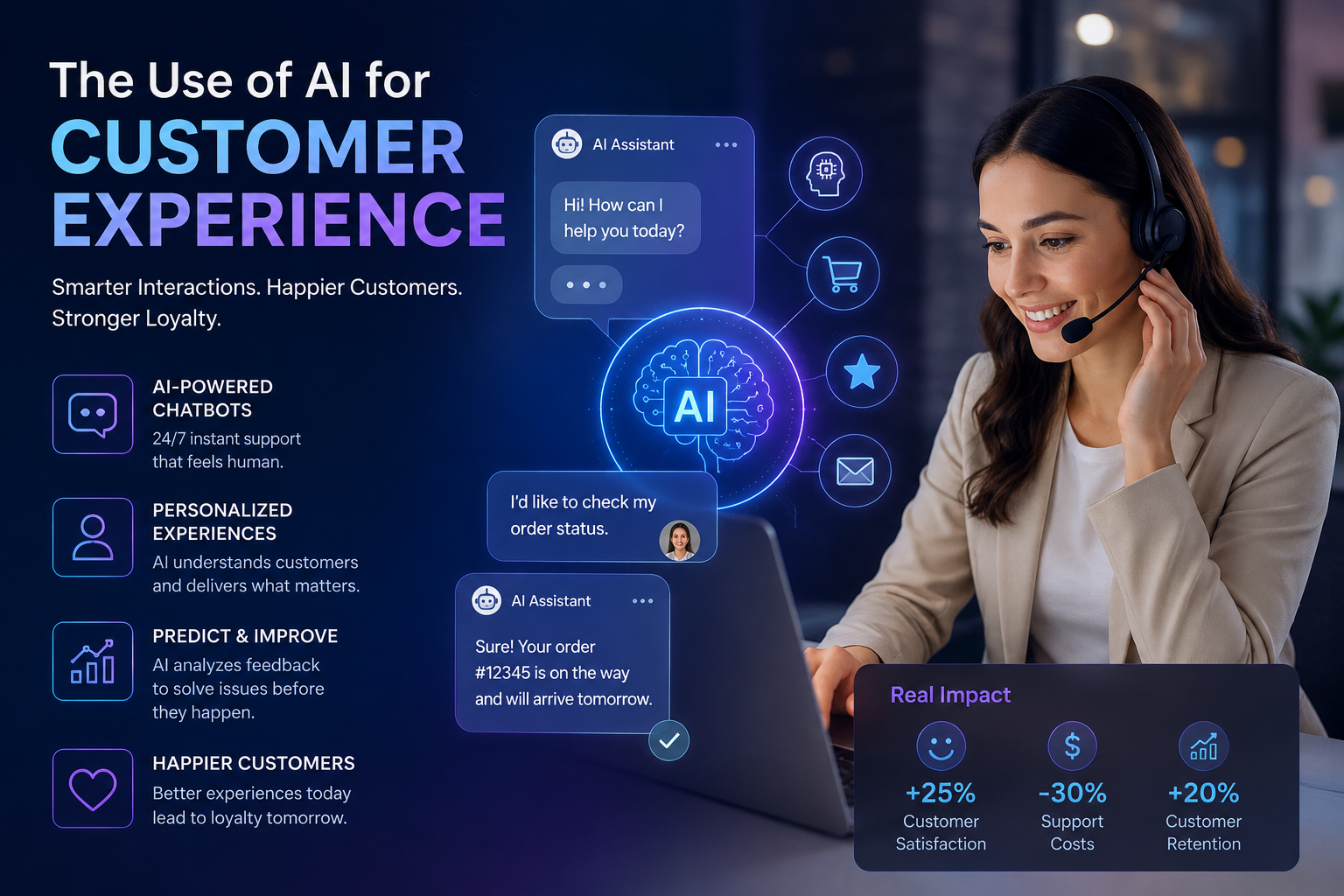
Key Ways AI Improves Customer Experience
1. Personalized Recommendations
AI algorithms analyze customer behavior, preferences, and purchase history to deliver personalized product or content recommendations, significantly improving relevance and engagement compared to generic, one-size-fits-all approaches.
Example application: E-commerce platforms using AI to recommend products based on browsing history, resulting in higher conversion rates and average order values.
2. 24/7 Customer Support Availability
AI-powered chatbots and virtual assistants provide instant customer support around the clock, addressing common questions and issues without requiring customers to wait for business hours or available human agents.
Example application: Businesses using AI chatbots to handle frequently asked questions, order tracking, and basic troubleshooting, freeing human agents to focus on more complex issues.
3. Faster Response Times
AI-powered systems can instantly analyze and route customer inquiries to the appropriate department or resource, significantly reducing wait times compared to manual triage processes.
Example application: Support ticketing systems using AI to automatically categorize and prioritize incoming requests based on urgency and complexity.
4. Proactive Issue Resolution
AI can analyze patterns in customer behavior or product usage to identify potential issues before customers even report them, enabling proactive outreach and resolution.
Example application: Subscription-based businesses using AI to identify customers at risk of churning based on usage patterns, allowing for proactive retention efforts.
5. Personalized Marketing Communications
AI enables businesses to deliver highly targeted marketing messages based on individual customer preferences, behaviors, and past interactions, improving relevance and engagement.
Example application: Email marketing platforms using AI to personalize subject lines, content, and send times based on individual recipient behavior patterns.
6. Sentiment Analysis and Feedback Management
AI-powered sentiment analysis tools can analyze customer feedback, reviews, and social media mentions at scale, helping businesses identify trends and address concerns more efficiently.
Example application: Businesses using AI to analyze customer reviews and identify common themes or emerging issues that need attention.
7. Voice and Conversational AI
Advanced voice AI technology enables more natural, conversational interactions with customers through phone systems or voice assistants, improving the overall support experience.
Example application: Companies using AI-powered voice systems to handle routine customer service calls, providing natural conversational interactions rather than rigid, menu-based phone systems.
Balancing AI and Human Touch
While AI offers significant benefits for customer experience, maintaining an appropriate balance between AI automation and genuine human interaction remains important. Key considerations include:
Knowing When to Escalate to Human Agents
AI systems should be designed to recognize when a customer issue requires human judgment, empathy, or specialized expertise, ensuring smooth escalation when needed.
Maintaining Transparency
Customers generally appreciate transparency about when they’re interacting with AI versus human representatives, helping maintain trust in the overall customer relationship.
Preserving Empathy in Sensitive Situations
For emotionally sensitive customer interactions, such as complaints or difficult situations, human involvement often remains essential for maintaining genuine empathy and understanding.
Best Practices for Implementing AI in Customer Experience
Start with Clear Use Cases
Identify specific customer experience pain points where AI can provide clear, measurable improvements, rather than implementing AI broadly without focused objectives.
Ensure Data Quality
AI-powered personalization and recommendations depend heavily on quality customer data. Invest in proper data collection and management practices to support effective AI implementation.
Test and Iterate
Continuously test AI-powered customer experience initiatives, gathering feedback and refining approaches based on actual customer responses and outcomes.
Maintain Human Oversight
Even with AI automation, maintain appropriate human oversight to catch and address issues that automated systems might miss or handle poorly.
Communicate Changes to Customers
When implementing new AI-powered customer experience features, communicate clearly with customers about what’s changing and how it benefits them.
Measuring the Impact of AI on Customer Experience
Businesses should track relevant metrics to assess the effectiveness of AI-powered customer experience initiatives, including:
- Customer satisfaction scores (CSAT): Direct measures of customer satisfaction with specific interactions
- Net Promoter Score (NPS): Broader measures of customer loyalty and likelihood to recommend
- Response and resolution times: How quickly customer issues are addressed and resolved
- Customer retention rates: Whether AI-powered improvements correlate with improved customer retention
- Conversion rates: For personalization initiatives, whether AI-driven recommendations improve conversion metrics
Common Challenges and How to Address Them
Over-Reliance on Automation
Relying too heavily on AI without adequate human oversight can lead to frustrating customer experiences when automated systems fail to handle nuanced situations appropriately. Maintain clear escalation paths to human support.
Data Privacy Concerns
Customers may have concerns about how their data is being used for AI-powered personalization. Maintain transparency about data usage and ensure compliance with relevant privacy regulations.
Implementation Complexity
Integrating AI-powered customer experience tools with existing systems can be technically challenging. Consider starting with well-established, easy-to-integrate solutions before pursuing more complex custom implementations.
The Future of AI in Customer Experience
As AI technology continues to advance, customer experience applications are likely to become even more sophisticated, including:
- Increasingly natural conversational AI that better mimics human-like interaction quality
- More sophisticated personalization based on deeper understanding of individual customer preferences and contexts
- Predictive customer service that anticipates and addresses issues before customers even recognize them
- Seamless omnichannel experiences that maintain context and continuity across different customer touchpoints
Final Thoughts
AI has become a powerful tool for improving customer experience, enabling businesses to deliver faster, more personalized, and more proactive service at scale. By thoughtfully implementing AI-powered solutions while maintaining an appropriate balance with human interaction, businesses can significantly enhance customer satisfaction and loyalty.
As customer expectations continue to rise, businesses that effectively leverage AI to improve customer experience will likely maintain a meaningful competitive advantage in their respective industries.
Frequently Asked Questions
- Can AI completely replace human customer service representatives?
No. While AI can handle many routine inquiries effectively, human representatives remain important for complex, sensitive, or emotionally nuanced customer interactions. - How does AI improve personalization for customers?
AI analyzes customer behavior, preferences, and past interactions to deliver more relevant recommendations, content, and communications tailored to individual customers. - What’s the biggest risk of using AI for customer experience?
Over-reliance on automation without adequate human oversight can lead to frustrating experiences when AI systems fail to handle nuanced or complex situations appropriately. - How can businesses measure whether AI is improving customer experience?Businesses can track metrics like customer satisfaction scores, Net Promoter Score, response times, and customer retention rates to assess AI’s impact on customer experience.
- Do customers mind interacting with AI instead of human representatives?
This varies by individual and situation, but many customers appreciate the speed and convenience of AI-powered support for routine inquiries, provided there’s a clear path to human assistance when needed.