
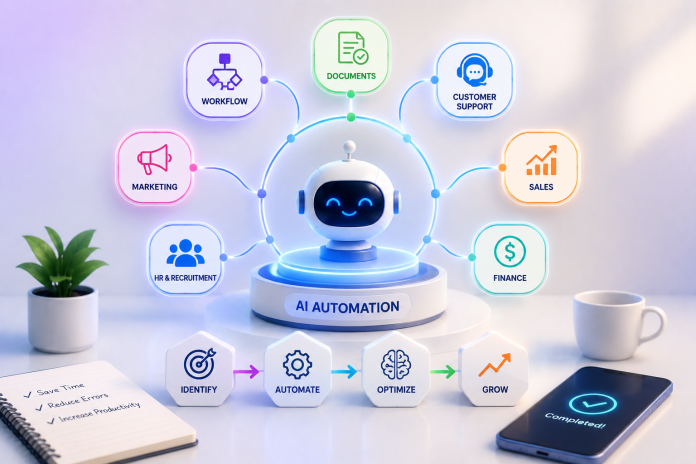
With AI automation becoming increasingly central to business operations, choosing the right tools can significantly impact how effectively you streamline processes and improve efficiency. This guide highlights the best AI automation tools available in 2026, organized by function, to help you find the right fit for your business needs.
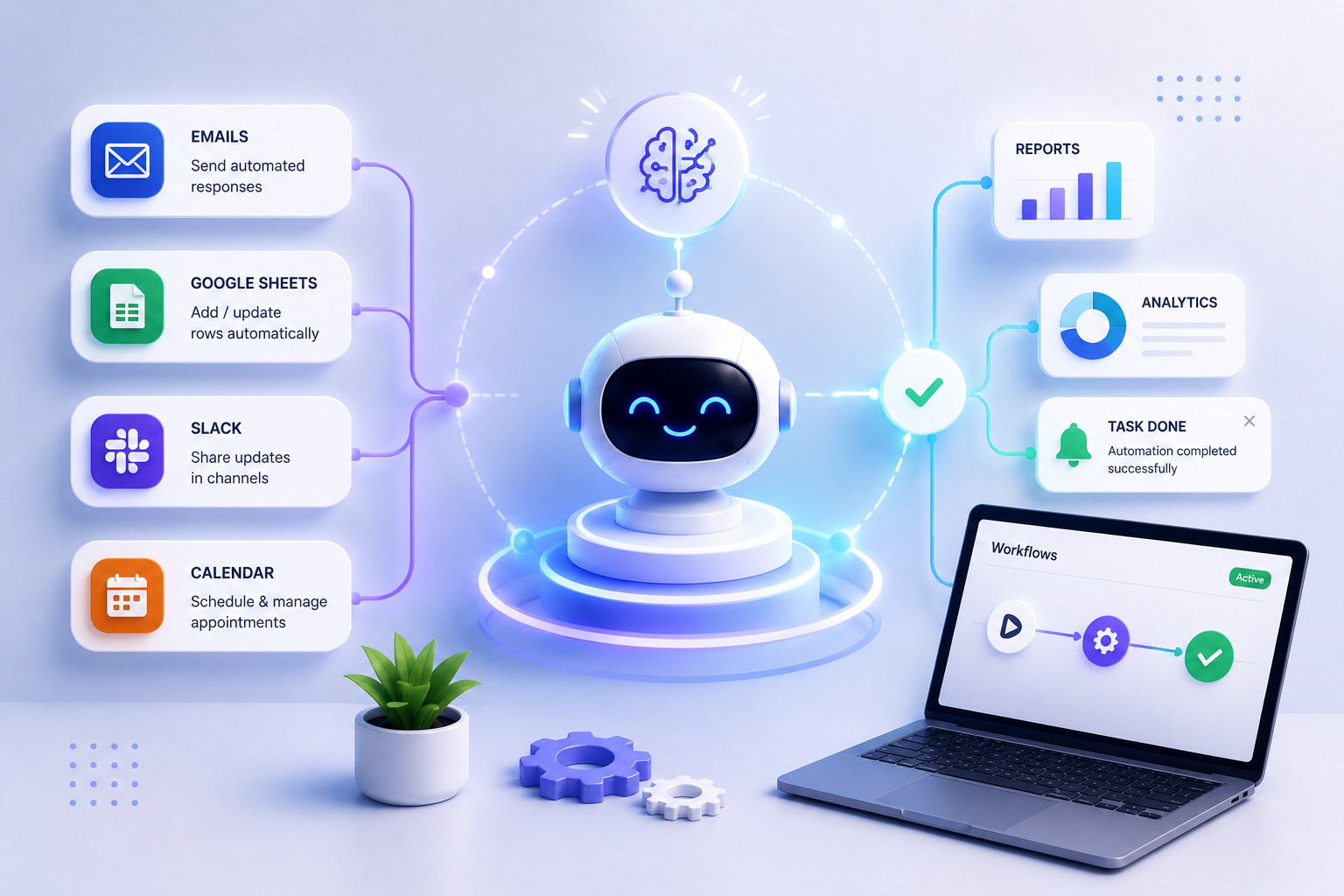
Workflow Automation Platforms
Zapier
Zapier remains one of the most popular workflow automation platforms, connecting thousands of apps and services with an intuitive, no-code interface, now enhanced with AI-powered features for smarter automation logic.
Best for: Cross-app automation, connecting everyday business tools, beginner-friendly automation
Make (formerly Integromat)
Make offers more advanced automation capabilities, allowing for complex, multi-step workflows with greater customization than simpler platforms.
Best for: Complex, multi-step workflows, advanced business process automation
n8n
n8n is an open-source automation platform offering flexibility for businesses that want more control over their automation infrastructure, including self-hosting options.
Best for: Technical teams wanting more customization and control over their automation infrastructure
Customer Service Automation Tools
Intercom
Intercom combines AI-powered chatbots with comprehensive customer relationship management features, helping businesses automate routine customer interactions while maintaining strong overall customer relationship tracking.
Best for: Integrated customer service and relationship management automation
Tidio
Tidio offers accessible AI chatbot capabilities specifically designed for small to medium-sized businesses, providing an approachable entry point into customer service automation.
Best for: Small business customer service automation, live chat with AI backup
Document Processing and Data Extraction Tools
DocuSign with AI features
DocuSign has incorporated AI capabilities for intelligent document analysis and processing, streamlining contract review and management workflows.
Best for: Contract and document workflow automation
Rossum
Rossum specializes in AI-powered document processing, particularly for invoices and structured business documents, automating data extraction and validation.
Best for: Invoice processing, structured document data extraction
Marketing Automation Tools
HubSpot
HubSpot incorporates AI-powered features throughout its marketing automation platform, including content generation, lead scoring, and campaign optimization.
Best for: Comprehensive marketing automation with integrated AI features
ActiveCampaign
Active Campaign offers AI-enhanced email marketing automation, including predictive sending times and personalized content recommendations.
Best for: Email marketing automation with AI-driven personalization
Sales Automation Tools
Salesforce Einstein
Salesforce’s AI capabilities, integrated into its CRM platform, help automate lead scoring, sales forecasting, and personalized customer outreach recommendations.
Best for: AI-enhanced sales pipeline management and forecasting
Clari
Clari uses AI to automate sales forecasting and provide predictive insights into deal progression and potential risks within the sales pipeline.
Best for: Sales forecasting and pipeline risk analysis automation
HR and Recruitment Automation Tools
Greenhouse
Greenhouse incorporates AI features to help automate resume screening and candidate matching, streamlining the recruitment process.
Best for: Recruitment workflow automation, candidate screening
Lattice
Lattice uses AI to help automate performance review processes and provide insights into employee engagement and development needs.
Best for: Performance management and employee development automation
Finance and Accounting Automation Tools
QuickBooks
QuickBooks incorporates AI features for automated transaction categorization, expense tracking, and financial reporting, reducing manual bookkeeping work.
Best for: Small business accounting and bookkeeping automation
Bill.com
Bill.com automates invoice processing and payment workflows, using AI to streamline accounts payable and receivable processes.
Best for: Invoice and payment processing automation
How to Choose the Right AI Automation Tools
When selecting AI automation tools for your business, consider:
- Specific use case fit: Choose tools specifically designed for your particular automation needs, rather than generic, one-size-fits-all solutions.
- Integration capabilities: Ensure the tool integrates well with your existing business systems and software.
- Scalability: Consider whether the tool can grow with your business as automation needs increase.
- Ease of implementation: Evaluate the technical expertise required to set up and maintain the automation, particularly if you lack dedicated technical staff.
- Cost structure: Compare pricing models to ensure they align with your expected usage and budget.
Building an Integrated Automation Stack
Rather than relying on a single automation tool, many businesses build an integrated “stack” of complementary tools addressing different business functions. For example, a business might use Zapier for general workflow automation, Intercom for customer service, and QuickBooks for financial automation all working together to create comprehensive operational efficiency.
Common Mistakes When Selecting Automation Tools
- Choosing tools based on popularity rather than fit for your specific business needs
- Underestimating implementation and integration complexity when selecting more advanced platforms
- Failing to consider long-term scalability as business needs grow and evolve
- Overlooking data security and privacy considerations, particularly for tools handling sensitive customer or financial information
Final Thoughts
The right AI automation tools can significantly improve efficiency across virtually every business function, from customer service and marketing to finance and human resources. By carefully evaluating your specific needs and choosing tools that integrate well with your existing systems, you can build an effective automation strategy that delivers genuine, measurable business value.
As AI automation technology continues to evolve, staying informed about new tools and capabilities will help ensure your business continues to benefit from the latest advancements in this rapidly growing space.
Frequently Asked Questions
- What is the best all-around AI automation tool for small businesses?
Zapier is often recommended for small businesses due to its accessible, no-code interface and broad compatibility with commonly used business applications. - Do I need multiple automation tools, or can one platform handle everything?Most businesses benefit from a combination of specialized tools addressing different functions, such as customer service, marketing, and finance, rather than relying on a single all-purpose platform.
- How much do AI automation tools typically cost?
Pricing varies widely based on the specific platform and usage volume, with many tools offering tiered pricing plans starting with affordable options for smaller businesses. - Can AI automation tools integrate with the software I already use?
Most modern AI automation platforms offer extensive integration capabilities with popular business software, though it’s important to verify specific compatibility before selecting a tool. - Do I need technical expertise to implement AI automation tools?
Many platforms are designed with user-friendly, no-code interfaces, though more advanced or highly customized implementations may benefit from additional technical expertise.